
A leaking pool out, and a backyard back
Complete fiberglass pool removal in Wesley Chapel — screened cage, concrete deck and all — backfilled, compacted and cleaned up in three days.
- Location
- Wesley Chapel, FL
- County
- Pasco County
- Completed
- October 2026
- Scope
- Full pool removal & backfill
3 days
Start to finished yard
~6 ft
Pool depth
~80 yds
Backfill brought in
20+ yrs
Owned by the homeowners
Twenty years of pool, and done with it
The pool came with the house. When these homeowners bought the property in Wesley Chapel more than twenty years ago it was already in the garden, and for a long stretch of those years they used it and enjoyed it.
Then it started costing them. Repairs got more frequent, and eventually the shell developed a leak they were topping up by hose. At some point they stopped swimming in it altogether — which is the worst position to be in with a pool, paying to maintain something nobody uses.
The water had to go somewhere. It collected around the pool and sat there, and the back garden turned swampy enough that mosquitoes became a real complaint rather than a Florida grumble.
What finished it was a change of mind rather than a change of circumstance. They had moved over to a hot tub, which did everything they actually wanted and took a fraction of the looking-after. They were not trying to clear space to build on. They just wanted the garden back, and less to maintain in it.
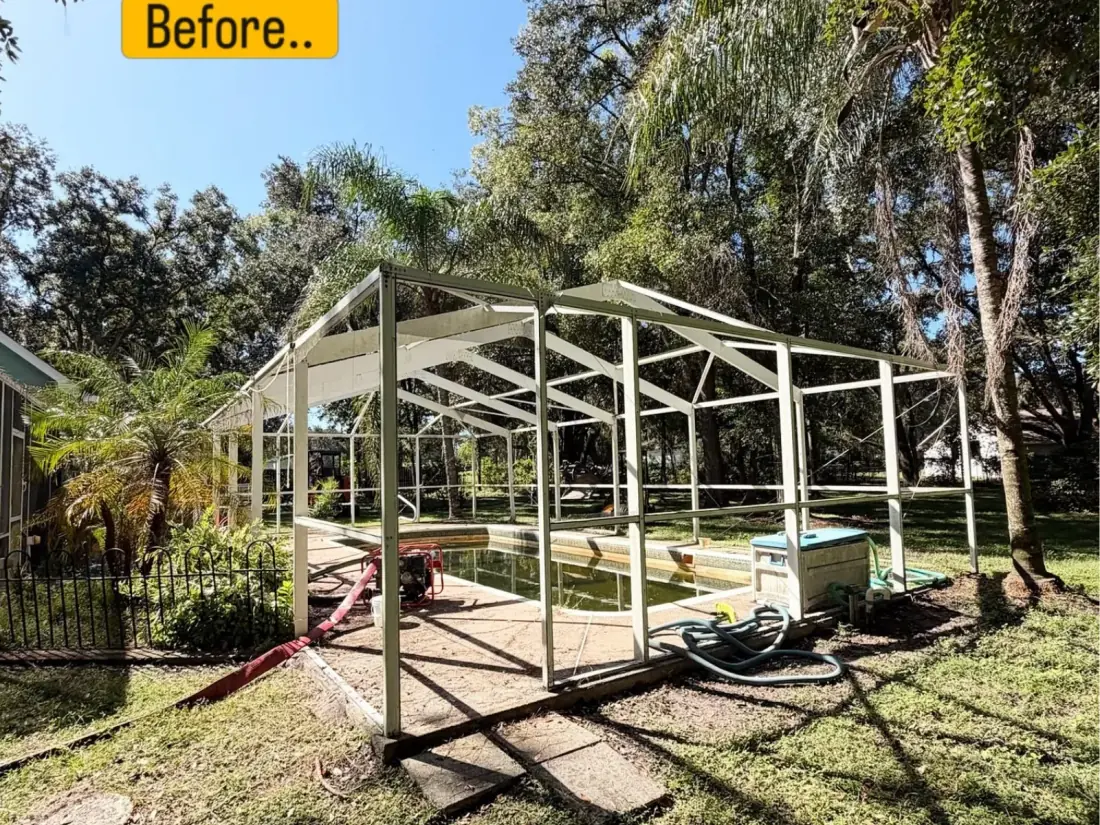
Green water and a cage the homeowners had stopped walking into.
Before, during, and after.
Three days, in order — cage, deck, shell, hole, fill.
The pool as we found it — screened cage still up, and green water the homeowners had given up refilling.
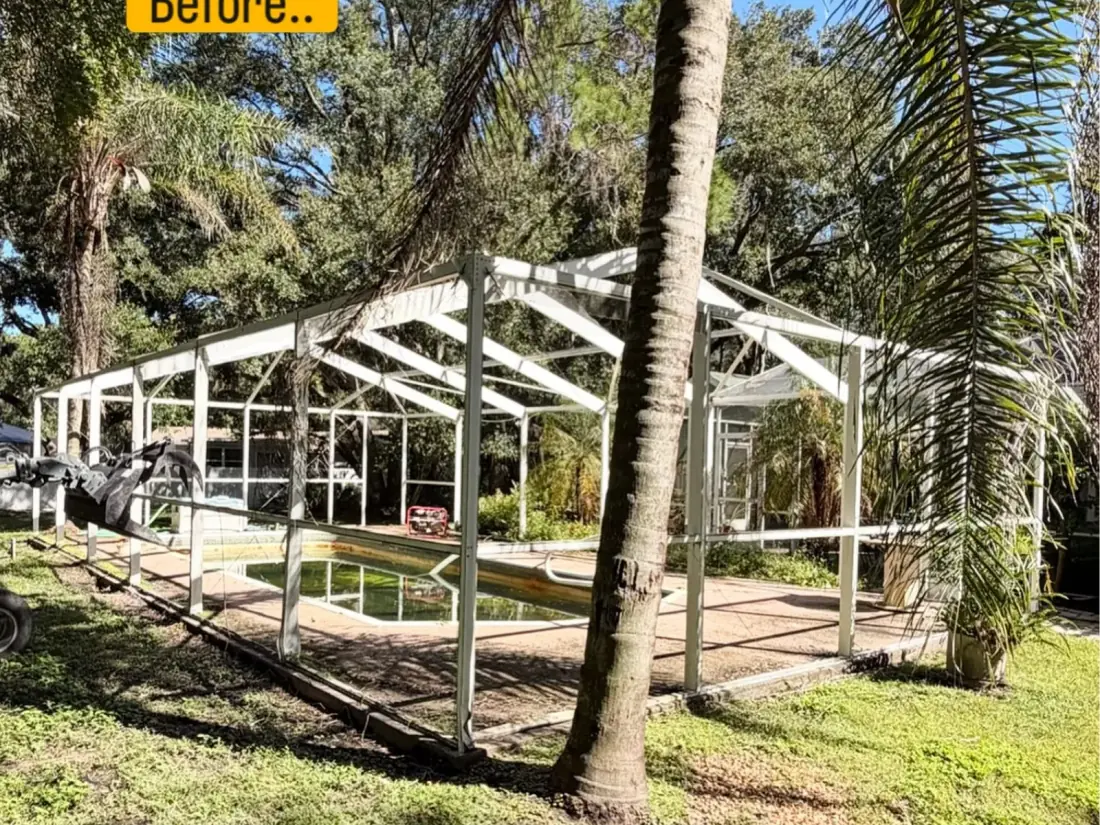
Standing water had become a mosquito problem. The cage came off first to open the yard up for equipment.
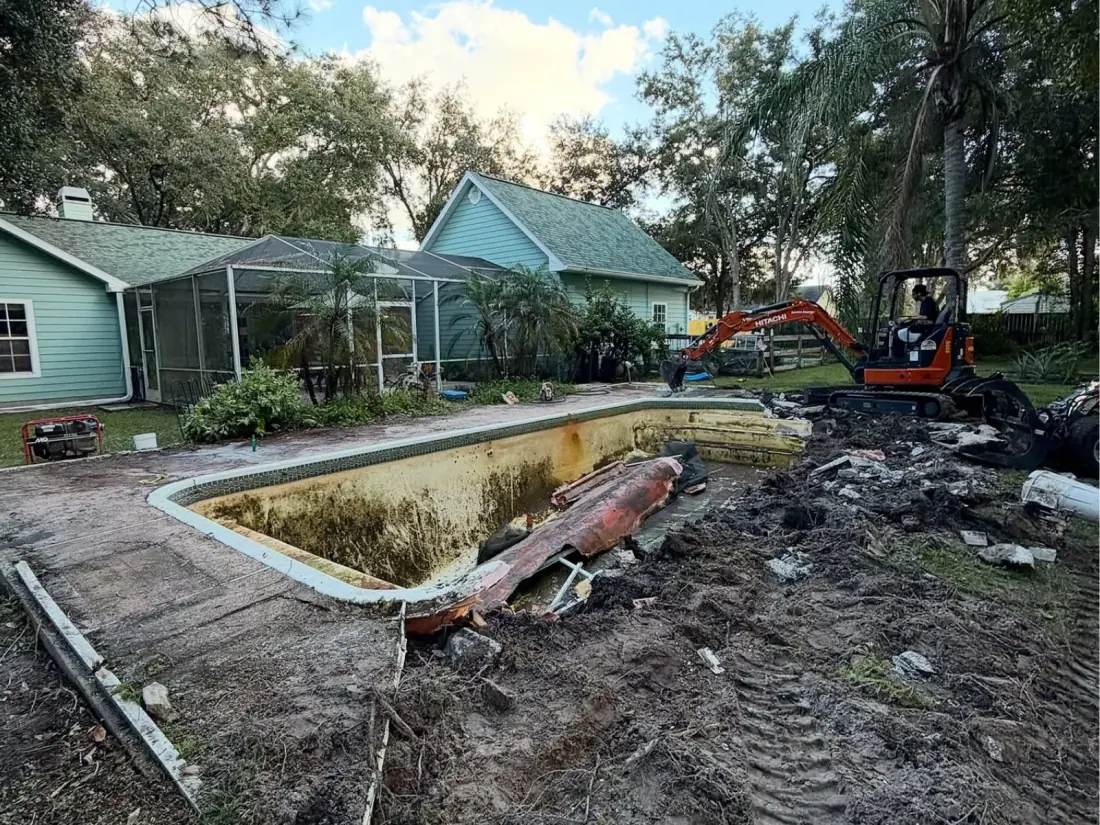
Cage gone and the pool drained. Breaking out the concrete deck opens up access to the shell underneath.
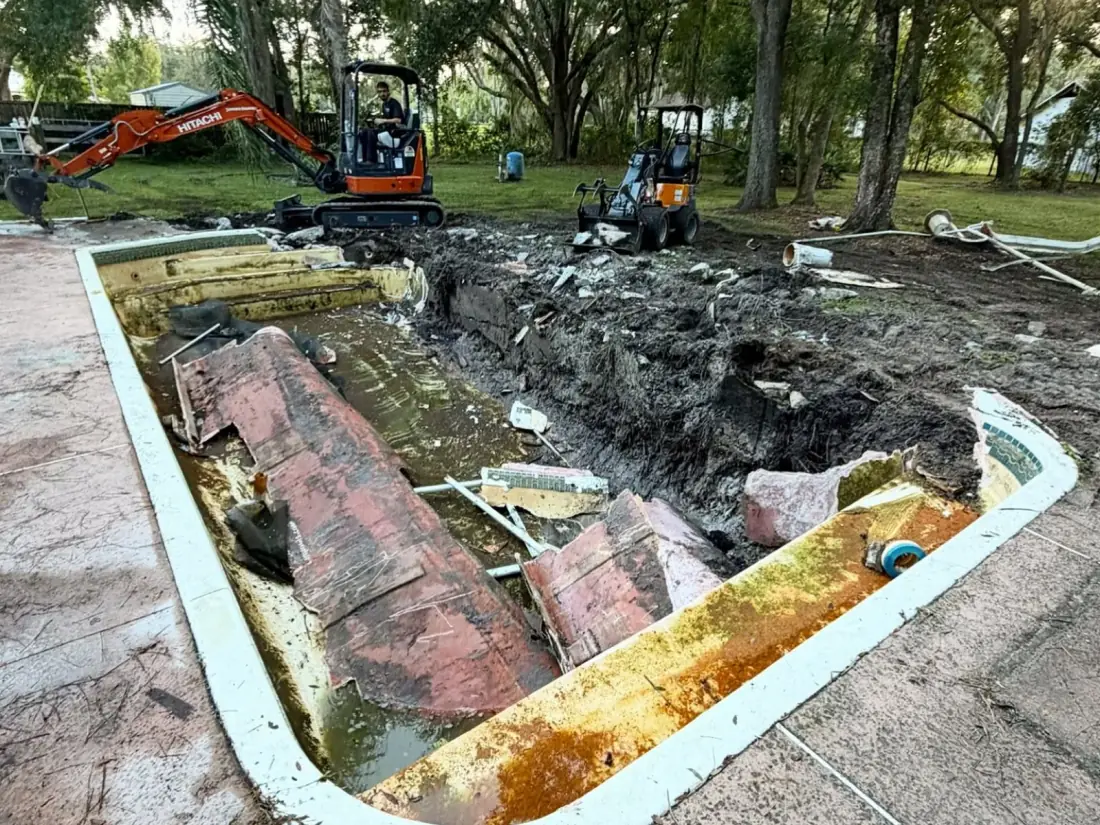
The shell itself, cut down and lifted out in sections rather than crushed and left in the ground.
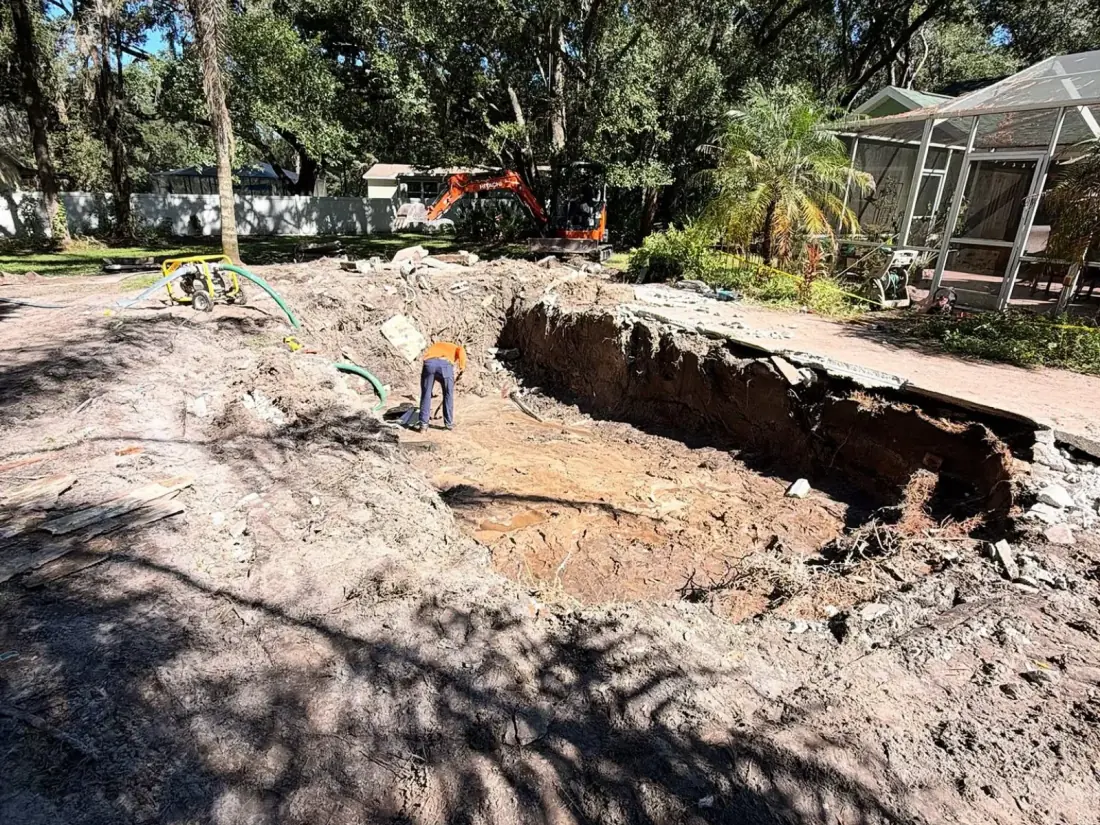
The hole with everything out of it. This is the point a full removal looks different from a fill-in.
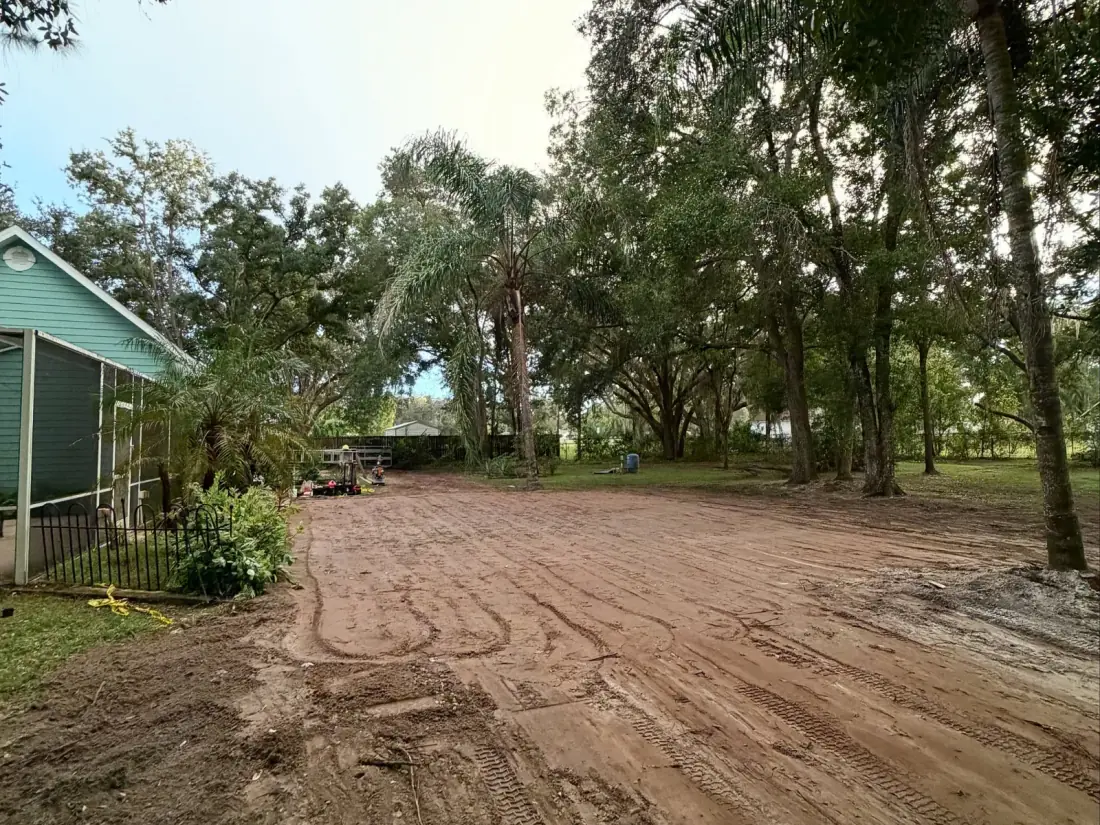
Roughly 80 yards of Crushcrete and dirt in, compacted and cleaned up. No cage, no pool, no deck — just open yard again.
What made this one awkward
Wet ground, mostly. A pool that has been leaking for a while does not just lose water — it soaks everything around it, and saturated ground changes how the whole job has to be sequenced.
You cannot compact fill properly into wet ground. Push on regardless and it looks fine on the day the trucks leave, then settles over the following couple of years and leaves a dip where the pool used to be. So parts of the excavation had to be given time to dry before fill went in, which is the difference between a three-day job and a two-day job.
The other constraint was the driveway. Every load of fill and every load of debris crosses it, and residential driveways are not built for that. The deliveries were planned around keeping weight off it where we could.
Preparation
- Underground utilities marked through Sunshine 811 before any digging started.
- Pool electrical and plumbing connections confirmed disconnected before demolition began.
- Equipment access and ground conditions walked before anything was scheduled.
- Fill deliveries and debris haul-off planned around the driveway.
- PPE on the crew and an organised work area for the full three days.
An 811 locate marks public utilities. Privately installed lines — a well feed, a run out to a shed — are not covered and may need a private locate.
How the pool came out
- 01
Screened cage off first
We stripped the screening and dismantled the aluminum framing before touching anything else. It goes first for a practical reason — until it is gone there is no way to get an excavator or a skid steer near the pool. All the enclosure material left the site with us.
- 02
Drained what was left
A sump pump took out the remaining water. The yard was already holding water, so getting the pool itself empty was the first step towards ground we could actually work on.
- 03
Concrete deck cut and broken out
Saw-cut into sections, then broken out and loaded with the skid steer and excavator — around 20 yards of concrete off the property in total. Cutting it rather than simply breaking it keeps the pieces to a size the machines can lift cleanly, and it stops cracks running out into the slab you are keeping.
- 04
The whole shell out of the ground
A full removal, not a partial. The fiberglass shell came out in sections and left the property instead of being punched through and buried. It costs more on the day and it is the reason the ground behaves predictably afterwards.
- 05
Fill in, and time to let it dry
About four truckloads went in — roughly 80 yards — as a blend of Crushcrete and dirt rather than dirt alone. Crushed concrete locks together and drains, which is what you want going into ground this wet. Even so, the saturated areas needed time to dry before compaction, because rushing compaction into wet fill is how a yard ends up sinking two years later.
- 06
Driveway and site cleaned
Fill deliveries and loaded trucks are hard on a residential driveway, so we planned the deliveries around protecting it and cleaned it down at the end. The crew left a tidy yard, not a tidy hole with a mess around it.
Equipment on site: excavator, skid steer, concrete saw, sump pump, compaction equipment and debris hauling.
Three days, and the garden is just a garden
The pool, the cage and the deck all left the property. The hole was filled and compacted, the driveway was cleaned down, and the homeowners got an open, level back garden with nothing in it that needs chemicals, servicing or topping up.
They were, by their own account, mostly relieved — more about never refilling a leaking pool again than about the yard itself. After twenty years of owning one, the appeal of the hot tub was that it asks almost nothing of them.
If you have a pool you have stopped using, that is usually the real calculation. Not what the garden will look like, but how much of your weekend it stops taking.

Our team on the finished lot, where the pool had been three days earlier.
How long does it take to remove a pool like this?
This one took three days from the first panel of the cage coming off to a compacted, cleaned-up yard — including the screened enclosure, the concrete deck, the pool itself, all the hauling and the backfill. Timing depends mostly on how big the pool is, what it is made of, whether a machine can actually reach it, and the state of the ground.
What is the difference between full and partial pool removal?
Partial removal means punching holes in the bottom, collapsing the top few feet of wall into the hole and filling over it. Some of the pool stays in your garden forever. Full removal, which is what we did here, takes the entire structure out and hauls it away before filling. Full removal costs more and is the one that leaves the ground straightforward to deal with later.
Can a fiberglass pool be taken out in one piece?
Not usually, and not here. The shell is cut down and lifted out in sections with an excavator. What matters is that the material leaves the property rather than being buried, which is what separates a full removal from a fill-in.
How much fill does it take to fill in a pool?
This one took roughly 80 yards — about four truckloads — for a pool around six feet deep, plus the deck area around it. It scales with the size and depth of the pool and how much of the surrounding concrete comes out with it. We used a blend of Crushcrete and dirt here rather than dirt alone: crushed concrete locks together and drains, which matters when the ground is already holding water.
What happens to all the concrete?
It leaves. On this job around 20 yards of concrete — the pool deck — was saw-cut, loaded and hauled off the property. Concrete is one of the more recyclable things that comes off a demolition site, and we recycle it wherever it is practical to.
Can I build over where my pool used to be?
Not on the strength of a backfill like this one. These homeowners wanted open yard, so the fill was placed and compacted for that. Putting a structure, a slab or an addition over a former pool is a different job — it generally needs engineered fill, compaction testing and sign-off. Tell us at the estimate if building over it is even a possibility and we will scope it that way from the start.
Will taking the pool out fix standing water in my yard?
It removes one cause of it. This pool was leaking and being topped up constantly, so taking it out took that source away. But drainage depends on how the ground sits, how it is graded and what the soil is like, and none of that changes just because the pool is gone. We will tell you honestly at the estimate if we think you have a drainage problem underneath the pool problem.
Do you take the screen cage and the concrete too?
Yes, and on this job it was all one scope — aluminum cage, concrete deck, pool, debris hauling, backfill, compaction and cleanup. It is usually cheaper and far less disruptive to do it in one go than to bring equipment back for each piece separately.
Do I need a permit to remove a pool in Pasco County?
Pool demolition commonly needs a permit and inspections, and the requirements vary by jurisdiction and by what exactly is being removed. Confirm it with Pasco County for your own address before work starts. We will tell you what we believe applies to your job when we quote it.
What about the utilities?
Underground utilities were marked through Sunshine 811 before anything was dug, and the pool's own electrical and plumbing connections were confirmed disconnected before demolition started. Worth knowing: an 811 locate covers public utilities, not privately installed lines like a well feed or a run out to a shed. Those may need a private locate depending on the property.
Other projects
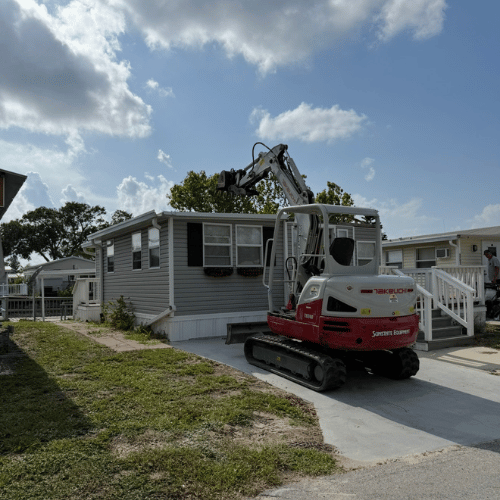
Ruskin · August 2026
Ruskin House Demolition
A two-bedroom home taken down on a tight waterfront lot and handed back to the builder as a clean, graded site.
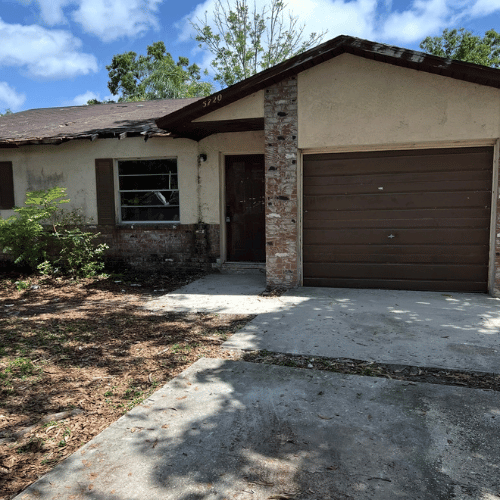
St. Petersburg · July 2026
Residential Full Interior Tearout — St. Petersburg
A complete residential interior strip-out — living areas, kitchen, bedrooms and garage taken back to the studs.
Let's take down what's standing in the way.
Talk to a real person at DND Demolition. Free estimates, transparent pricing, and a crew that shows up on time — every time.